
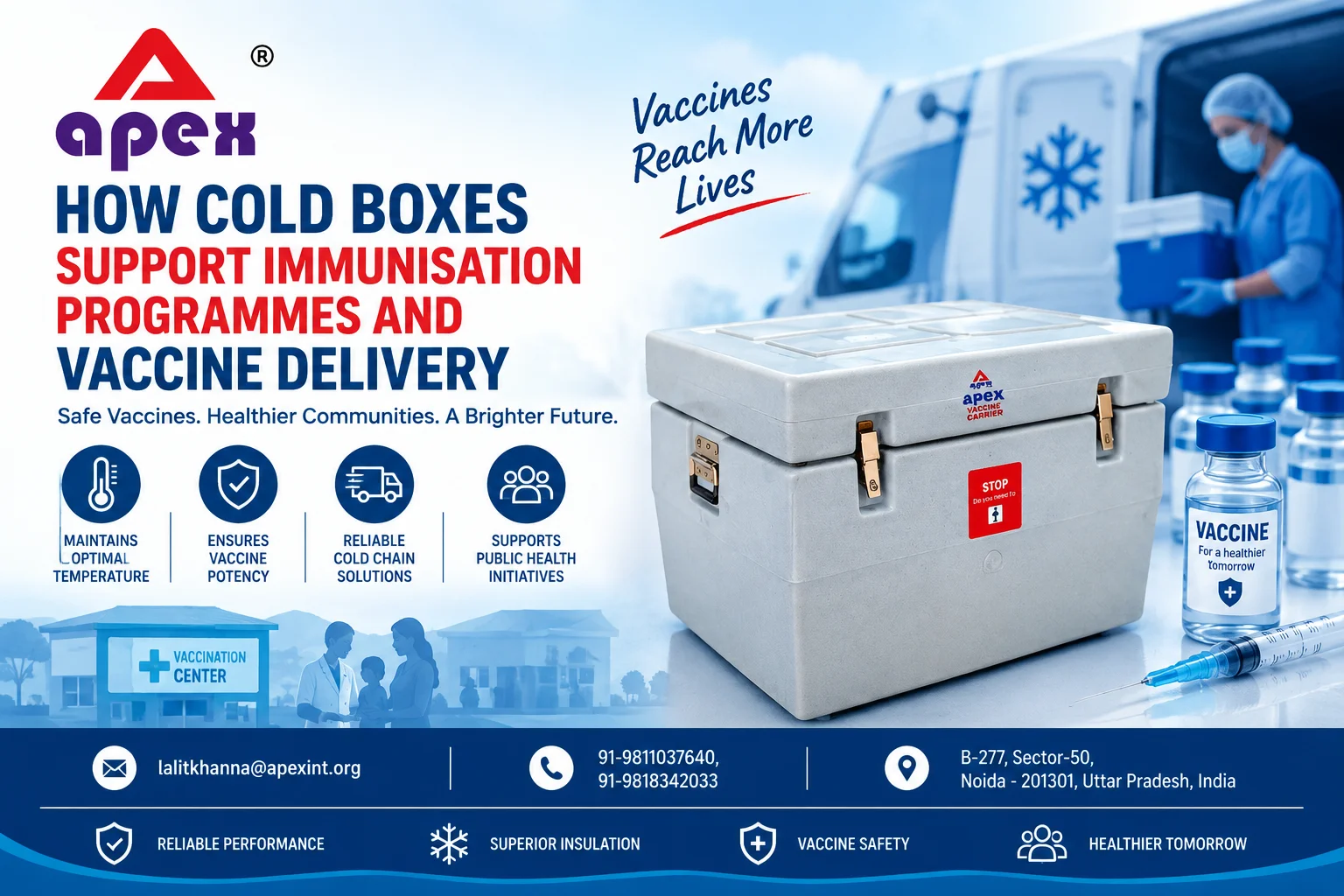
One of the main obstacles faced during transportation of vaccines is ensuring a secure temperature for proper cold chain management as well as proper storage and handling. Trusted cold boxes manufacturers offer reliable insulated boxes that solve the problem of the transportation of vaccines. These insulated boxes allow doctors to transport vaccinations to patients at the required temperature during the delivery process.
Why Are Cold Boxes Important
Vaccines are biologically sensitive products that can become inefficacious due to improper storage. This emphasizes the need for vaccines to be stored at the appropriate temperature. Cold boxes are used to store vaccines temporarily while they are being transported from centralized storage to the healthcare delivery point as well as to the vaccination centers. These containers are ideal for remote immunization programs where health workers are sent to areas with restricted access to health facilities.
How Cold Boxes Support Vaccine Delivery
1. Maintains Temperature During Transportation
To make sure that vaccines stay in the accepted temperature range, it is recommended to use temperature-controlled insulated vaccine transportation boxes. An efficient insulated box depends on the insulation used, outside temperature, delivery volume, and the time of delivery.
Also Read: How Cold Boxes Manufacturers Help in Safe Vaccine Transportation
2. Reaching Remote and Rural Communities
Vaccination drives can take practitioners to places that are not easy to reach. The absence of refrigeration systems can become a serious problem. Insulated cold boxes allow transporting vaccines from the cold-storage facility to temporary vaccination stations.
Supporting Large-Scale Vaccination Campaigns
The delivery of vaccines is one of the prerequisites of successful implementation of mass vaccination programs in various locations. The capacity of the container is also of great importance as it stores sufficient vaccines without violating the package.
Key Features to Consider When Selecting Cold Boxes
- Temperature Regulation: Select boxes that can maintain the ideal temperature required for vaccine delivery at every stage of transport.
- Size: Choose appropriately sized boxes based on the amount of vaccines and coolants used, as well as the method of transport.
- Durability: Look for boxes constructed from tough materials to withstand heavy use in vaccination clinics.
- Transportability: Assess the weight of the box, its locking system, and its portability during a patient’s treatment.
- Compatibility: Check whether the box is suitable for packaging vaccines according to immunization standards.
Also Read: How Vaccine Carriers Manufacturers Support Healthcare Services
Conclusion
Successful vaccination relies on proper management of vaccines and cold chain equipment at access points in the distribution process. The insulated cold boxes are built with suitable materials to maintain the vaccines and medical supplies within the accepted temperature range. This is how cold boxes manufacturers support the mass immunization drives, especially in remote areas.
Check Apex International’s cold chain boxes and choose which cold chain equipment meets your needs.
Frequently Asked Questions
Our cold boxes can hold large volumes of vaccines, anywhere between 5.5 to 22.5 liters.
We utilize a CFC-free insulation material that retains temperature effectively.
The long-range model of our cold box has a shelf life of 153.5 hours at a temperature of 43 degrees Celsius, without the time of opening the lids. The short-range model has a shelf life of 84.07 hours.
Yes, we manufacture long-range as well as short-range cold boxes for use.
Yes, the cold boxes we produce are also used for WHO PQS listed in the market.