
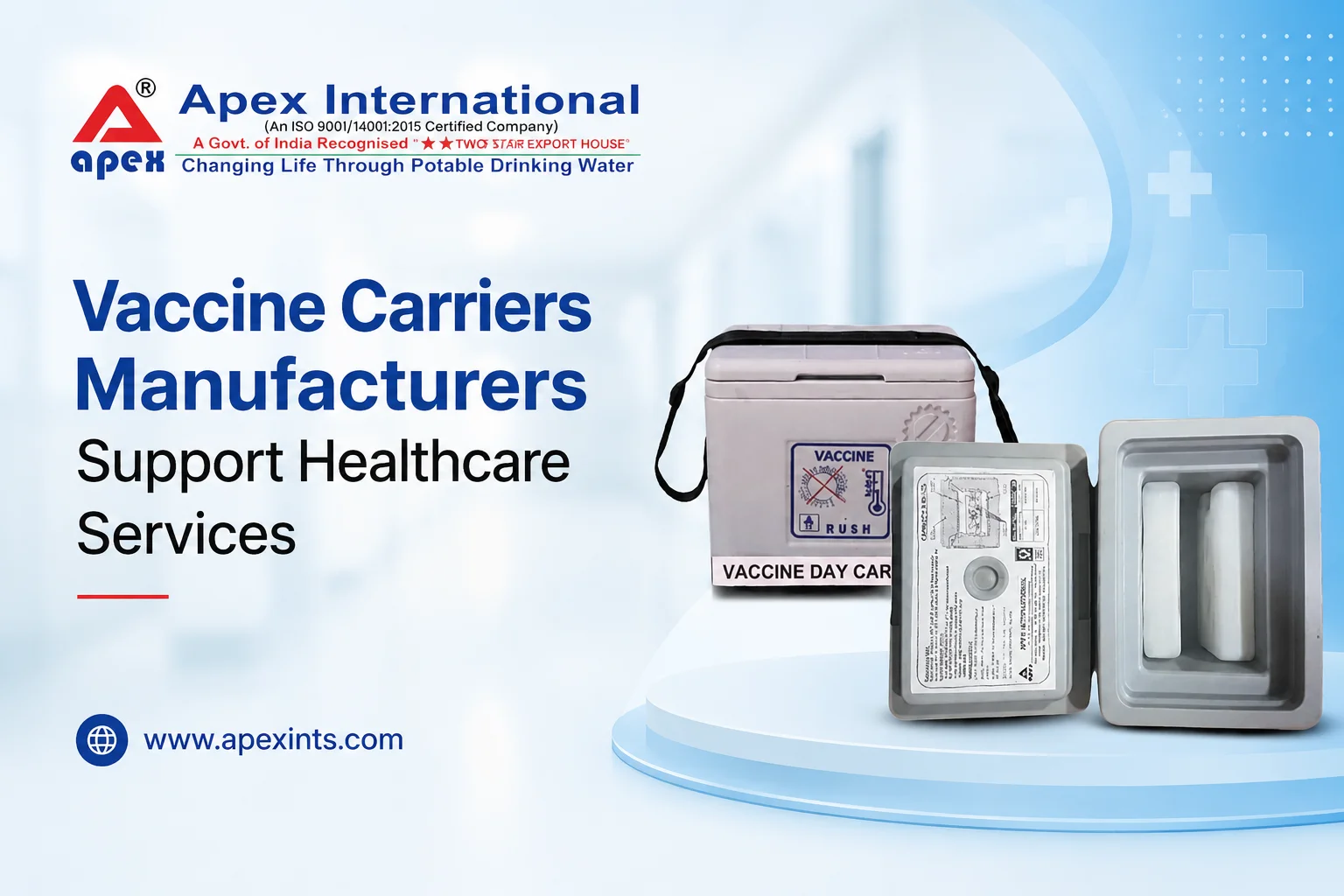
Vaccines are a highly sensitive element of the healthcare domain that requires an extremely robust handling medium. It is developed within a controlled atmosphere, and there are well-defined standards for its storage. Any deviations from the normal range of temperature or contamination of external elements can make it ineffective and in some cases, poisonous as well. During immunization drives or transportation of vaccines, maintaining the same conditions around them is essential. Here, the vaccine carriers manufacturers play the crucial role of making handling equipment in which the vaccine can be contained in ideal conditions.
What is a Vaccine Carrier
As the name suggests, a vaccine carrier is a portable device used for carrying vaccines safely from healthcare centers to patients at home or from the manufacturing centers to the retailers. It has an insulated chamber that keeps the vaccine within an ideal range of temperature. The vaccine carrier manufacturers supply these for rural healthcare outreach programs, immunization drives, cold chain transportation, disease control campaigns, veterinary vaccination programs, and mobile diagnostic laboratory support.
Features to Look For
Since the carrier of vaccines is required to maintain safety, the manufacturers design them with precise engineering. Here are some of the key features:
Extended Temperature Control
Vaccine carriers are designed to maintain the required temperature range for long durations during transportation. Advanced insulation materials like polyurethane and a strong external body with HDPE help in protecting vaccines from heat exposure and temperature fluctuations. This ensures vaccine potency remains intact throughout the cold chain process.
WHO Compliance
When the government rolls out healthcare programs to administer vaccines, they grant permission to use a carrier only when it meets certain standards and expectations. World Health Organization (WHO) is the most credible body to which the vaccine carriers manufacturers must comply.
Capacity
Transportation has different requirements when it comes to storage capacity. According to the length of tubes, volume, and quantity, the capacity of the carrier must be decided. It should accommodate the cooling packs, vaccine vials and other medical supplies.
High Quality Materials
The durability and performance of carriers depend on the quality of materials used by the vaccine carriers manufacturers. HDPE is used as an external body material due to its lightweight yet strong nature. HIPS is used as an inner lining to protect vaccines in case the carrier faces bumps during transit.
Easy to Handle
As these carriers are used for transportation from collection centres to the clinics, hospitals or door-to-door immunization campaigns, its body must be easy to carry and handle.
Conclusion
For maintaining the safety and right conditions for the vaccines during transportation, a well-built carrier is important. It has the right material to insulate the interior temperature, resist impact, and remain lightweight to support the workers in the healthcare campaigns. Vaccine carriers manufacturers support the cold chain pharmaceutical systems and overall healthcare services. We at Apex International supply multiple variants of vaccine carriers. Our deep expertise and strong manufacturing control make us a reliable choice for the healthcare industry for our medical cold chain equipment.