For non-profit organizations, government bodies, and humanitarian agencies in the supply business, the mass purchasing of necessary supplies accelerates the process of making purchases and preparing for distribution. Thus, trustworthy relief kits items suppliers have been proven to represent an important part in making the necessary goods available for the affected people.
Role of Bulk Relief Supplies in Humanitarian Aid
Bulk supplies are essential for disaster response, which allows organizations to cover more people with their operations. The availability of supplies ensures a response on behalf of non-governmental organizations and the administration in different communities where assistance is necessary.
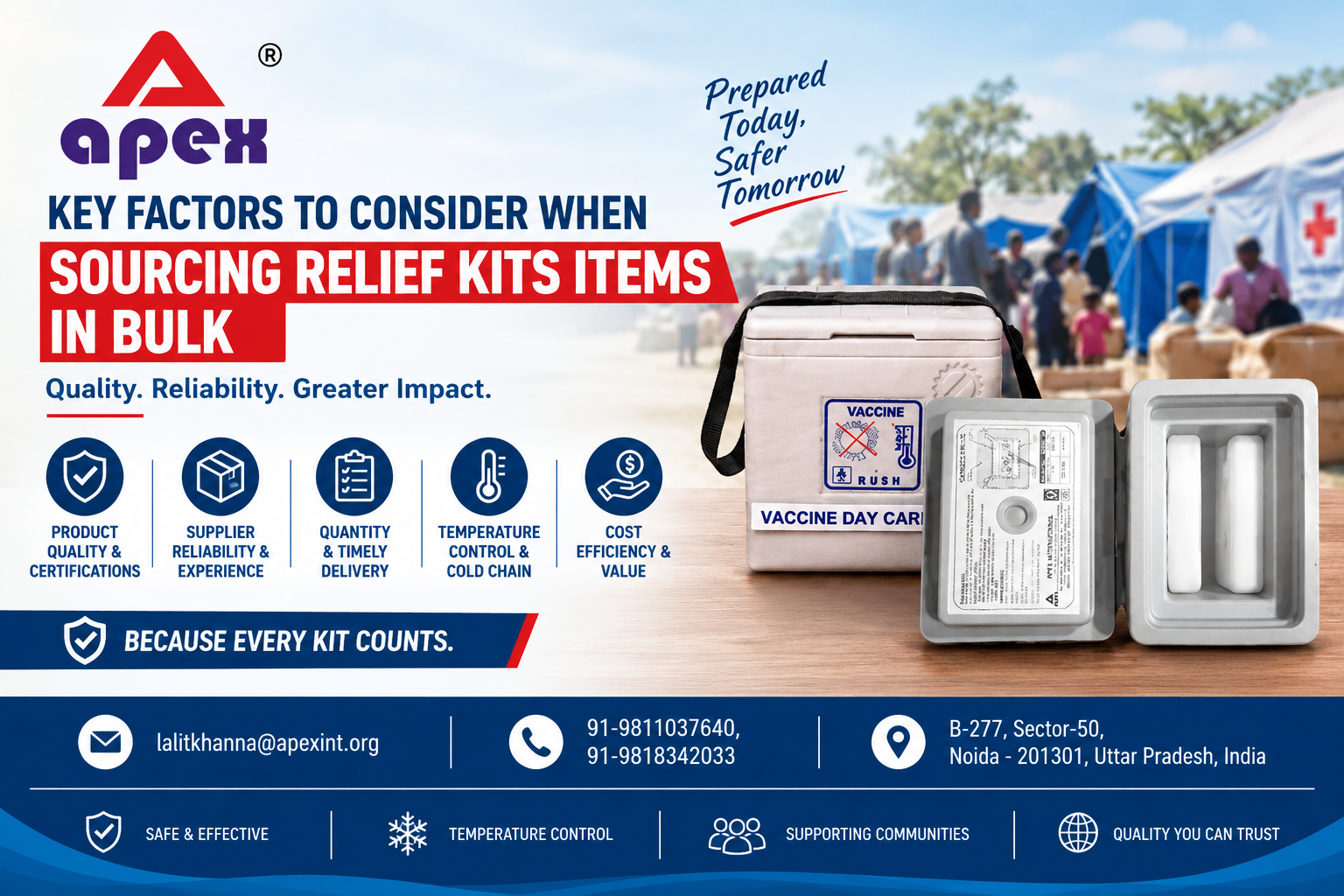
Factors to Consider When Sourcing Relief Kit Items
Product Quality and Practicality
Relief materials undergo long journeys through different handling points before getting to intended beneficiaries. Strongly built materials and firm packaging provide good protection of goods during transit and storage. When choosing Relief Kit Items for their operations, NGOs should consider product quality, handling ease, and adequate usage.
Supplier Reliability and Availability
Large relief operations often require delivery of large amounts of supplies in a short amount of time. Reliable relief kits items suppliers help NGOs place bulk orders and plan their delivery in accordance with the distribution schedule. Essential aspects of supplier reliability include the presence of clear specifications, up-to-date inventory information and reasonable delivery timelines. Effective communication makes it possible for relief teams to track their orders and manage their work in times of urgency.
Cost and Delivery Arrangements
Purchasing in bulk involves product price, packaging, transport and delivery costs. Another consideration is delivery of essential relief items to different destinations. By comparing suppliers’ offers with the quality of products supplied, NGOs can evaluate their offers.
Also Read: How Vaccine Carriers Manufacturers Support Healthcare Services
Relief Supplies and Distribution Needs
Emergency Relief Kits for Timely Aid
Emergency relief kits are created to help people in difficulties. The composition of these packages should match the goal of the relief project and the needs of the people who will receive them. Well-designed packing and well-organized transportation can help aid workers deliver packages.
Disaster Relief Packages
Disaster Relief kits are used to help people after disasters, such as floods, earthquakes, and hurricanes. What is needed in the kits would depend on local factors, the extent of the disaster, and the requirements of the affected population.
Coordinating Essential Relief Items
Proper distribution of relief supplies needs a lot of coordination between procurement departments, suppliers, and relief workers. Making the right choice of products, packing them properly, and making proper arrangements for transport will make supplies available for distribution.
Also Read: How Cold Boxes Manufacturers Help in Safe Vaccine Transportation
Conclusion
Dependable supply and streamlined logistics play a key role with regard to disaster response efforts of organizations. Quality of products, bulk sourcing, effective packaging, and timing have an impact on prompt provision of aid supplies.
Apex International is one of the relief kits items suppliers for those exploring options for the supply of aid materials. Explore the details of the products available and discuss wholesale supply needs.
Frequently Asked Questions
The list of Relief Kit items varies according to the type of relief operation. The commonly required items comprise sanitary items, essential goods, and many more.
High-Density Polyethylene (HDPE) material is used to manufacture hygiene storage boxes, making them leak-proof and robust.
Our Relief Kit has received WHO certification, making it fit for use in humanitarian and relief operations.
The volume of the vaccine storage box is 1.67 litres and weighs 4.34 kg when fully loaded.
Yes. NGOs and other organizations can buy relief supplies in bulk to source essential items for mass relief operations.