
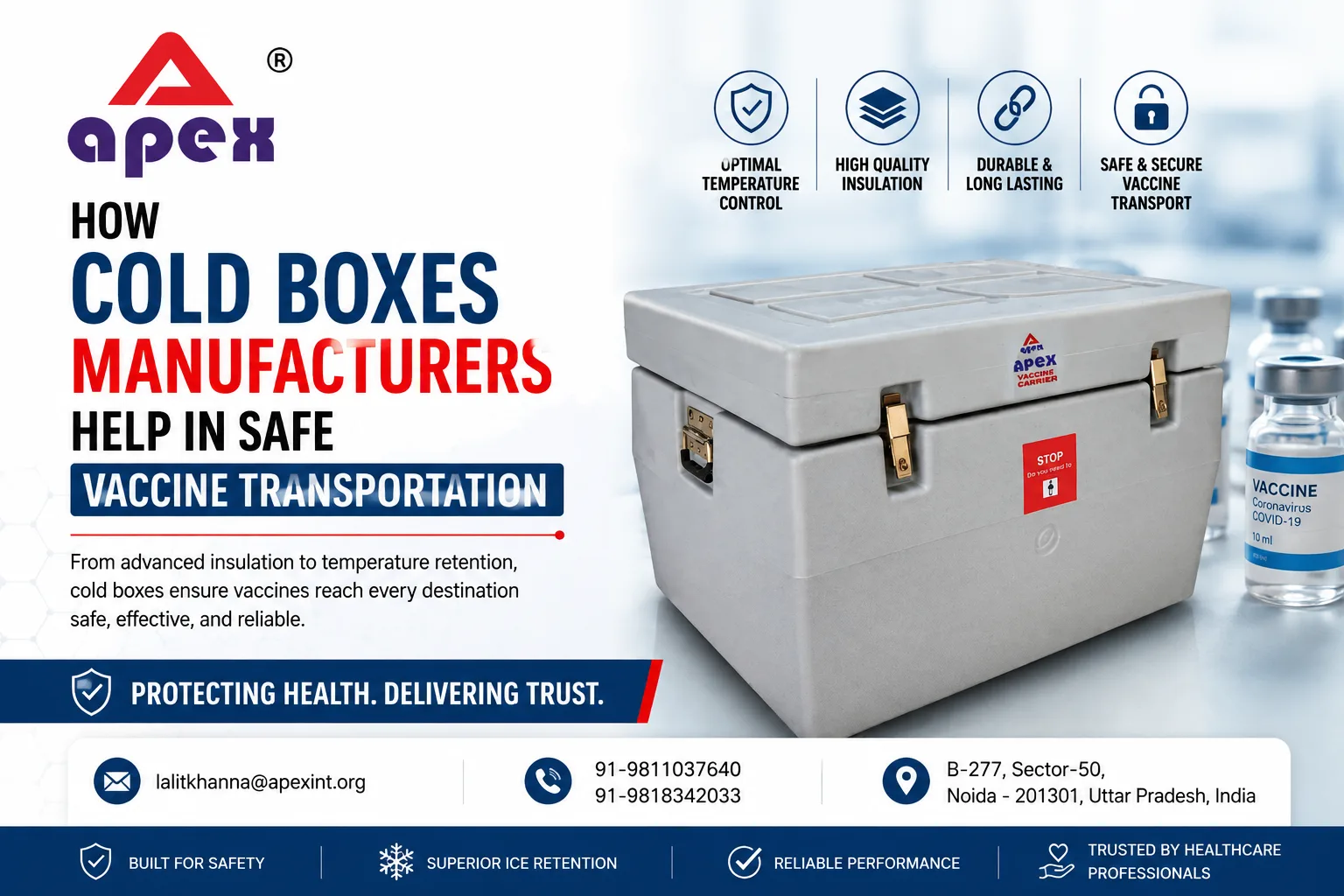
Cold boxes are passive insulated containers that maintain the optimal temperature using ice packs and other thermal storage materials. Their performance is determined by the insulation quality, arrangement of coolants inside the box, its size, and transportation period.
The experienced cold boxes manufacturers help to ensure the safety of vaccines by building these containers according to all the requirements. They calculate the density of the insulation layer, box dimensions,n and position of the ice packs to keep the vaccines safe while being transported between the storage facilities, medical institutions, and the vaccination centers.
What is Cold Box
A cold box is a thermally insulated box designed for keeping the product going through transportation in a desired temperature range. Unlike the powered refrigeration system, the cold box does not require it to be electrically powered at all times.
The reason for this is that the performance of a cold box depends on the various factors involved, including insulation materials employed in the construction of the box, configuration of coolant elements inside it, and external temperature conditions at the time of transportation.
Also Read: How Vaccine Carriers Manufacturers Support Healthcare Services
Key Features of Cold Boxes
1. Efficient Thermal Insulation
Insulation is crucial for the effectiveness of a cold box, as it helps in regulating heat flow from outside into the vaccine compartment.
2. Appropriate Vaccine Storage Capacity
Cold boxes come with capacity options depending on their use. The ideal capacity needs to be one that matches the vaccine quantity consumed rather than just the outer dimension of the box.
3. Strong Structure
Cold boxes must endure repeated movements, loading, and unloading. With a sturdy shell and internal insulation, a cold box can be used for more ordinary cold-chain activities.
4. Proper Arrangement of Ice Packs
Ice packs bring about the cooling inside a passive cold box. Their number, placement, and preparation are significant.
How to Choose a Cold Box for Vaccine Transportation
The box should be suitable for its vaccine weight, transport time, environmental conditions, and cold chain systems in use.
- Check Storage Capacity: Calculate the actual quantity of vaccines that a single shipment can accommodate. To deliver your goods, you must take notice of the number of vaccines your container can carry and not merely of its overall outer size.
- Check Cold Life: Cold life of your vaccines must be compared against the longest transport time and not against the average transport duration. In order to ship the vaccines while the weather is hot, make sure to select a unit with proven performance.
- Check Insulation: Insulation system defines the speed at which external heat reaches the vaccine compartment. Polyurethane insulation is often used in high-functioning insulated containers due to its thermal insulation abilities.
- Check Standards: For vaccine transportation, product specifications must be compared to the demands of the cold chain. Find out the information about cold life, storage capacity, insulating performance, coolant needs, and qualification or prequalification status.
Also Read: Why Choose Water Ice Packs Over Gel Ice Packs?
Conclusion
A cold box is used in vaccine transport with ice packs and water packs inside, which provide a cold ambient condition inside an insulated box. Reliable cold boxes manufactures consider the requirements of practical use in the transportation of vaccines.
They provide different capacities for the products so that users can choose the necessary equipment according to the duration of transportation, the amount of the vaccine, the conditions of its usage, and the handling process.
Apex International has a variety of cold boxes for the delivery of vaccines and storage under specific conditions. We supply our cold chain equipment for numerous kinds of vaccination projects.
Frequently Asked Questions
A cold box is used to store and transport vaccines that are sensitive to temperature changes.
We offer cold boxes in a wide variety from 5.5 to 22.5 liters.
We use CFC-free Polyurethane for insulation in cold boxes.
No. The performance of cold box depends on its insulation material, thickness and build quality, not the size.